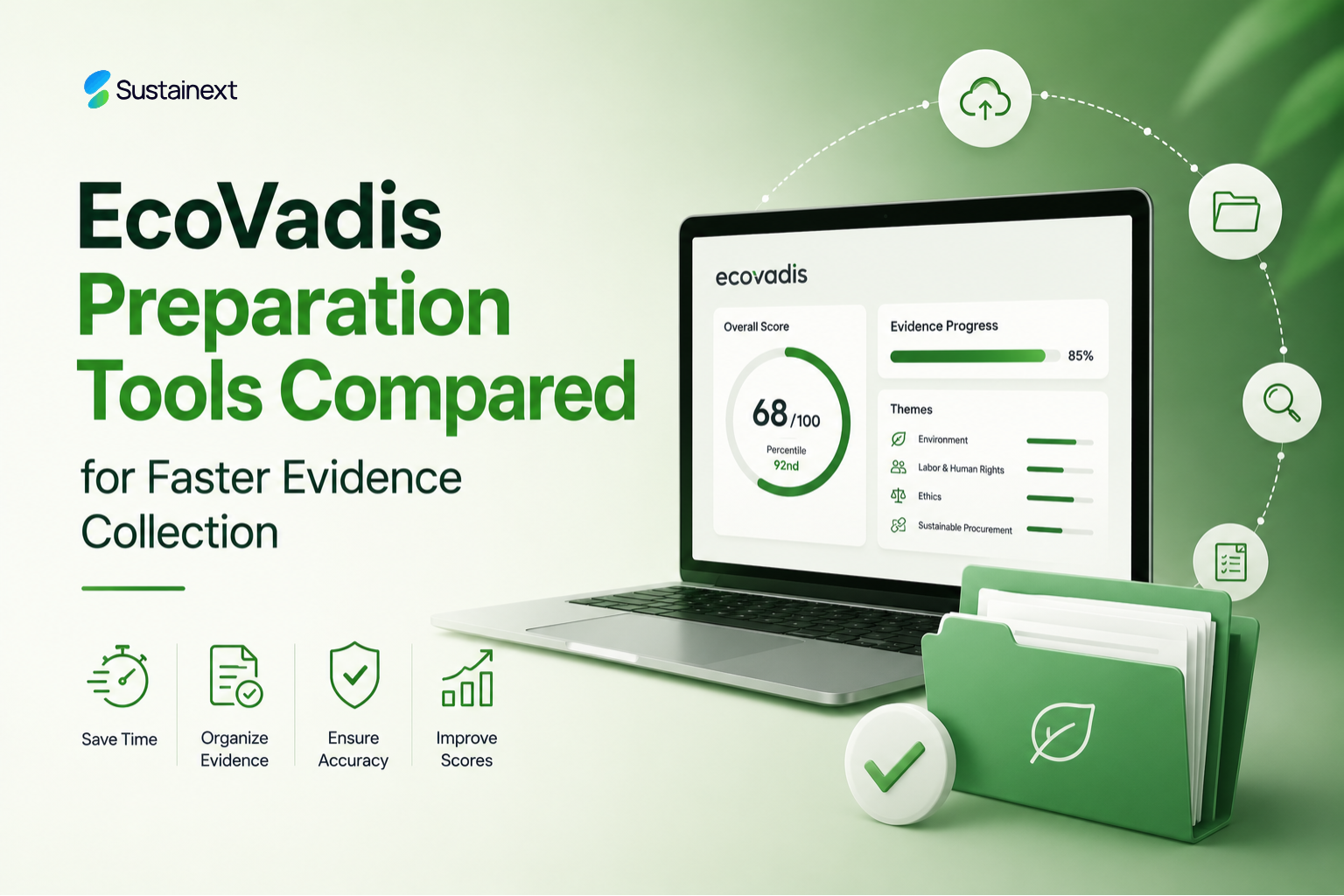
If your team is preparing for EcoVadis for the first time, one question usually slows everything down: what documents do we actually need before we start the questionnaire?
That is where most first-time submissions lose momentum. Teams open the assessment, see questions across environment, labor and human rights, ethics, and sustainable procurement, then realize the evidence is scattered across HR folders, procurement drives, EHS systems, legal policies, and emails. The result is familiar: late submissions, weak evidence, duplicated effort, and lower-than-expected scores.
This guide gives you a practical EcoVadis documents checklist you can use before the questionnaire opens. It is built for busy ESG, procurement, compliance, operations, and quality teams that need a realistic way to gather evidence, assign ownership, and avoid common submission mistakes.
EcoVadis evaluates sustainability management systems across four core themes and scores companies based on the quality of their policies, actions, and results, supported by credible evidence from the assessed entity. Official methodology and help content also emphasize that documents must be recent, relevant, complete, and aligned to the scope being evaluated. EcoVadis methodology and supporting-document guidance make this clear. EcoVadis documents help
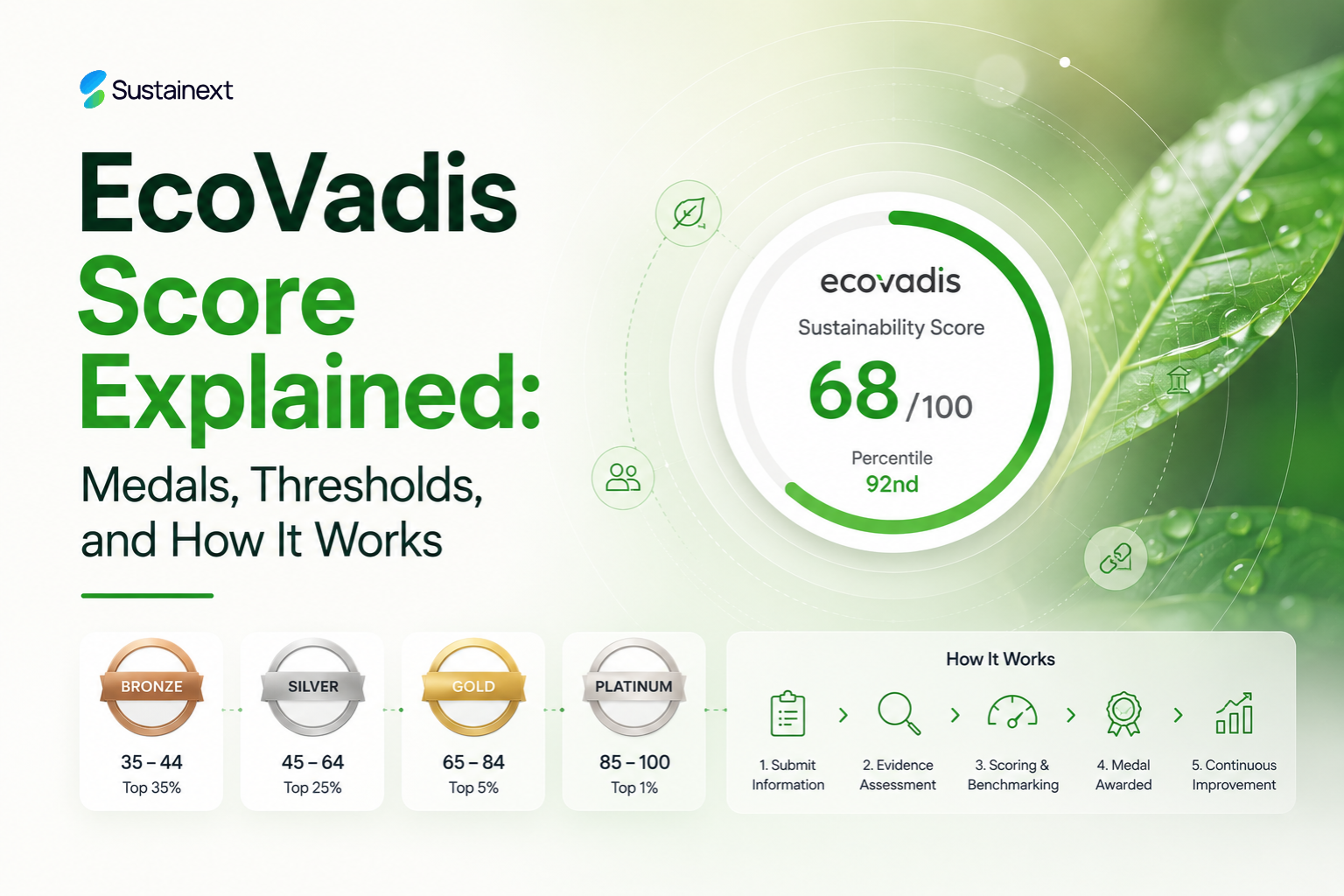
For teams new to the process, it helps to first understand how the rating works and what buyers expect from it. Sustainext’s overview of eCOVADIS is a useful starting point before you build your submission pack.
Why an EcoVadis documents checklist matters
EcoVadis is not just a form-filling exercise. Your answers only get credit when they are backed by evidence. In practice, that means the strength of your submission is often limited less by intent and more by documentation discipline.
A good ecovadis documents checklist helps you:
- identify evidence before deadlines become urgent
- avoid uploading documents that will not be credited
- match each document to the right question and business scope
- reduce back-and-forth between departments
- improve consistency across future annual reassessments
It also helps you distinguish between a policy that exists, an action that was implemented, and a result that can be measured. That distinction matters because EcoVadis assesses management systems through those pillars, not through claims alone. EcoVadis methodology
Before you collect anything: the 5 evidence rules
Before building your ecovadis evidence checklist, align the team on these basic rules.
1. The document must match the assessed scope
If the EcoVadis assessment covers a particular entity, site group, or country scope, the evidence should clearly relate to that scope. Group-wide policies can still help, but only when they demonstrably apply to the entity being rated.
2. The document must be credible and not created only for EcoVadis
EcoVadis explicitly says documents created solely to satisfy the questionnaire are not accepted as valid evidence. That means last-minute one-page declarations written just for submission are risky and often ineffective. EcoVadis supporting documents
3. The document should be recent
Older documents may still support foundational policies, but operational evidence should be current enough to show that the management system is active. A stale policy with no proof of implementation weakens the response.
4. The document should be machine-readable and clear
Scanned images with unreadable text, missing dates, or unclear ownership can slow review and reduce usability. EcoVadis also provides guidance on preparing machine-readable documents in its help center. EcoVadis documents section
5. The document should prove one of three things
Every file should support at least one of these:
- Policy: your company’s formal commitment
- Action: what you implemented to operationalize the policy
- Result: the measurable outcome, KPI, audit result, or tracked progress
EcoVadis documents checklist: the master list
Below is a practical ecovadis required documents checklist organized by theme. You will not need every document listed here, because questionnaires are customized by company size, industry, and geography. Still, this is the most useful starting point for first-time preparation. EcoVadis confirms questionnaire scope varies by risk profile and activated criteria. EcoVadis questionnaire help
1. Environment documents checklist
Environment evidence should show that your company has environmental commitments, control processes, and tracked outcomes.
Core policy documents
- Environmental policy
- Climate change or decarbonization policy
- Energy policy
- Waste management policy
- Water stewardship policy
- Biodiversity or land-use policy, where relevant
- Chemical or hazardous materials management policy
Owner: EHS, sustainability, operations
Freshness: reviewed within the last 12–24 months
Best format: signed PDF with approval date and scope
Action and implementation documents
- ISO 14001 certificate and scope statement, if applicable
- Environmental training records
- Site inspection reports
- Waste segregation procedures
- Emergency response procedures for spills or releases
- Energy-efficiency project logs
- Renewable electricity contracts or utility documentation
- Water reduction initiatives and implementation plans
- CAPA logs related to environmental incidents
- Internal audit records
Owner: EHS, plant operations, facilities, quality
Freshness: ideally within the last 12 months
Best format: reports, logs, certificates, meeting records
Results and KPI documents
- Energy consumption trends
- Scope 1 and Scope 2 emissions data, where tracked
- Waste generation and diversion/recycling rates
- Water withdrawal or discharge metrics
- Environmental incident statistics
- Reduction targets and year-on-year performance reports
Owner: ESG, EHS, finance, operations
Freshness: most recent reporting cycle
Best format: KPI dashboards, audited reports, management review decks
If your team is also building more robust carbon data foundations, Sustainext’s guide to Product Carbon Footprint (PCF) can help connect product-level environmental evidence with broader sustainability reporting.
2. Labor and human rights documents checklist
This section is often broader than companies expect. It covers workforce policies, working conditions, diversity, health and safety, and human rights controls.
Core policy documents
- Code of conduct for employees
- Human rights policy
- Anti-discrimination and equal opportunity policy
- Diversity, equity, and inclusion policy
- Working conditions or labor standards policy
- Occupational health and safety policy
- Anti-harassment policy
- Child labor and forced labor prohibition policy
Owner: HR, legal, compliance, EHS
Freshness: reviewed within the last 12–24 months
Best format: approved policy documents with version history
Action and implementation documents
- Employee handbook
- Training completion records for health and safety, anti-harassment, or labor rights
- Grievance mechanism procedure
- Whistleblower process for workers
- Incident investigation reports
- Contractor safety onboarding materials
- Risk assessments for workplace health and safety
- PPE procedures and toolbox talk records
- Emergency drills and attendance logs
- Corrective action plans following safety incidents
- Accessibility accommodations process
- Worker consultation committee minutes, where relevant
Owner: HR, EHS, site management, compliance
Freshness: within the last 12 months for records and logs
Best format: registers, training exports, meeting minutes, SOPs
Results and KPI documents
- Lost-time injury rate or TRIR records
- Employee turnover data
- Training hours per employee
- Gender diversity metrics
- Absenteeism and occupational illness trends
- Grievance volumes and closure rates
- Third-party audit results on labor conditions, if applicable
Owner: HR, EHS, ESG
Freshness: latest annual or quarterly cycle
Best format: KPI reports, board updates, HR dashboards
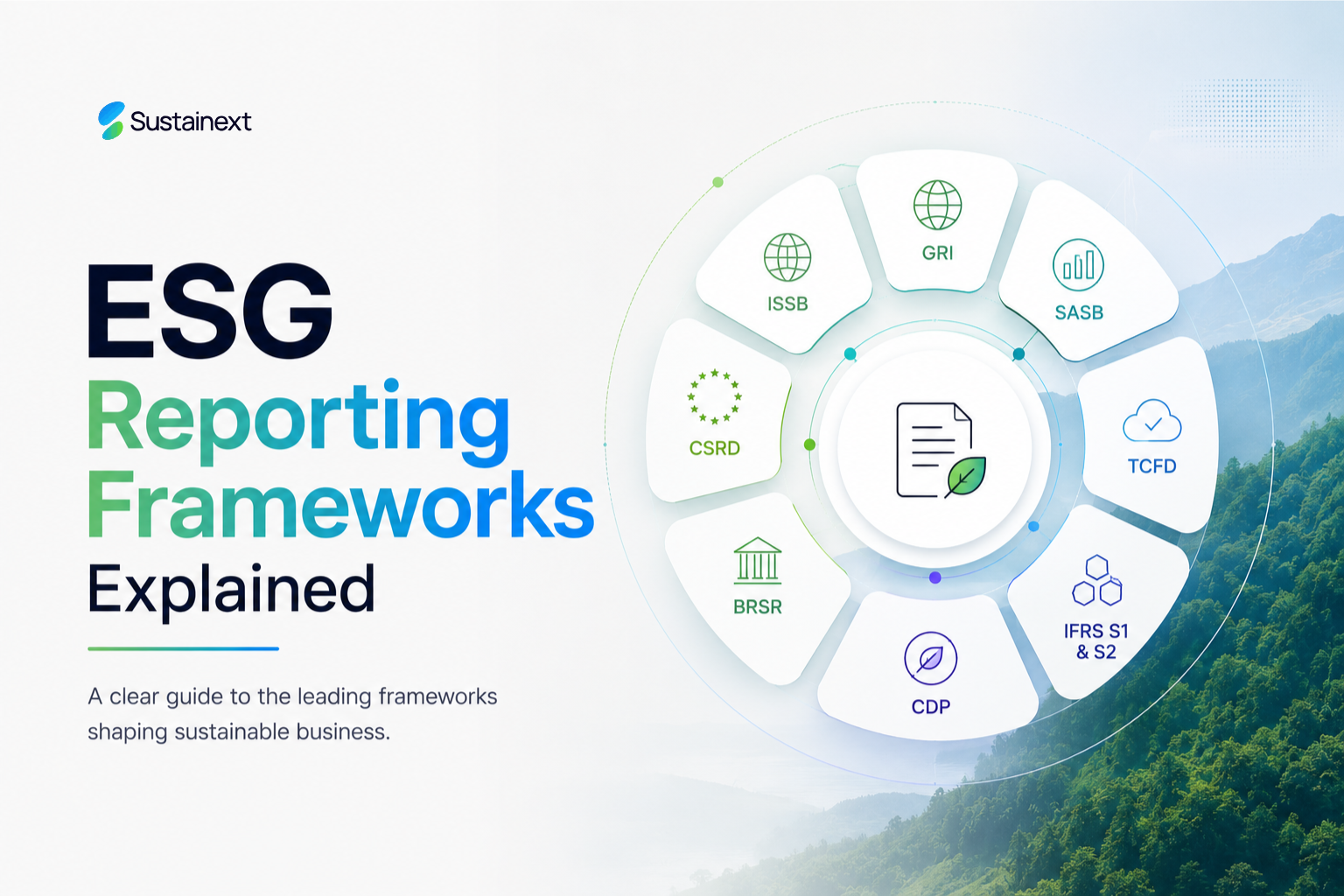
For teams comparing broader disclosure expectations beyond EcoVadis, Sustainext’s article on ESG Reporting Frameworks Explained for 2026 – Sustainext is useful for understanding how workforce and governance evidence overlaps across frameworks.
3. Ethics documents checklist
Ethics evidence should show that misconduct risks are governed systematically, not informally.
Core policy documents
- Business ethics policy
- Anti-bribery and anti-corruption policy
- Gifts, hospitality, and conflicts of interest policy
- Data privacy and information security policy
- Competition or antitrust policy
- Speak-up or whistleblower policy
- Fraud prevention policy
Owner: Legal, compliance, IT, internal audit
Freshness: reviewed within the last 12–24 months
Best format: signed policy PDFs, board-approved charters
Action and implementation documents
- Ethics training records
- Conflict of interest declaration forms
- Due diligence process for third parties
- Case handling or investigation procedures
- Hotline management process
- Internal control testing records
- Cybersecurity awareness-training logs
- Vendor anti-bribery clauses in contracts
- Audit committee minutes relating to ethics oversight
Owner: Compliance, legal, procurement, IT security
Freshness: within the last 12 months preferred
Best format: logs, workflow exports, procedure manuals
Results and KPI documents
- Number of ethics complaints received and resolved
- Corruption incidents and corrective actions
- Policy acknowledgment completion rates
- Third-party ethics screening coverage
- Internal audit findings by risk category
Owner: Compliance, internal audit, legal
Freshness: latest reporting period
Best format: dashboards, annual summaries, audit reports
4. Sustainable procurement documents checklist
For many suppliers, this is the theme that causes the most last-minute scrambling because the evidence sits across procurement, supplier quality, legal, and ESG functions.
Core policy documents
- Sustainable procurement policy
- Supplier code of conduct
- Responsible sourcing policy
- Conflict minerals policy, where relevant
- Supplier human rights requirements
- Supplier environmental requirements
- Supplier onboarding governance documents
Owner: Procurement, supply chain, legal, ESG
Freshness: reviewed within the last 12–24 months
Best format: policy PDFs and signed code documents
Action and implementation documents
- Supplier onboarding checklist
- Supplier risk screening criteria
- ESG questions in RFIs, RFPs, or onboarding forms
- Supplier self-assessment questionnaires
- Audit protocols for suppliers
- Supplier corrective action plans
- Contract templates with ESG clauses
- Procurement team training records
- Category risk assessment documentation
- Supplier segmentation matrix
- Escalation process for supplier non-conformance
Owner: Procurement, supplier quality, compliance
Freshness: current year preferred
Best format: templates, process maps, audit records, workflow exports
Results and KPI documents
- Percentage of spend covered by supplier code of conduct
- Number or percentage of suppliers screened for ESG risk
- Supplier audit completion rates
- Corrective action closure rates
- Share of strategic suppliers assessed for sustainability
- Procurement scorecards including ESG criteria
Owner: Procurement operations, ESG, analytics
Freshness: latest annual or quarterly reporting cycle
Best format: dashboards, spend analytics, supplier review packs
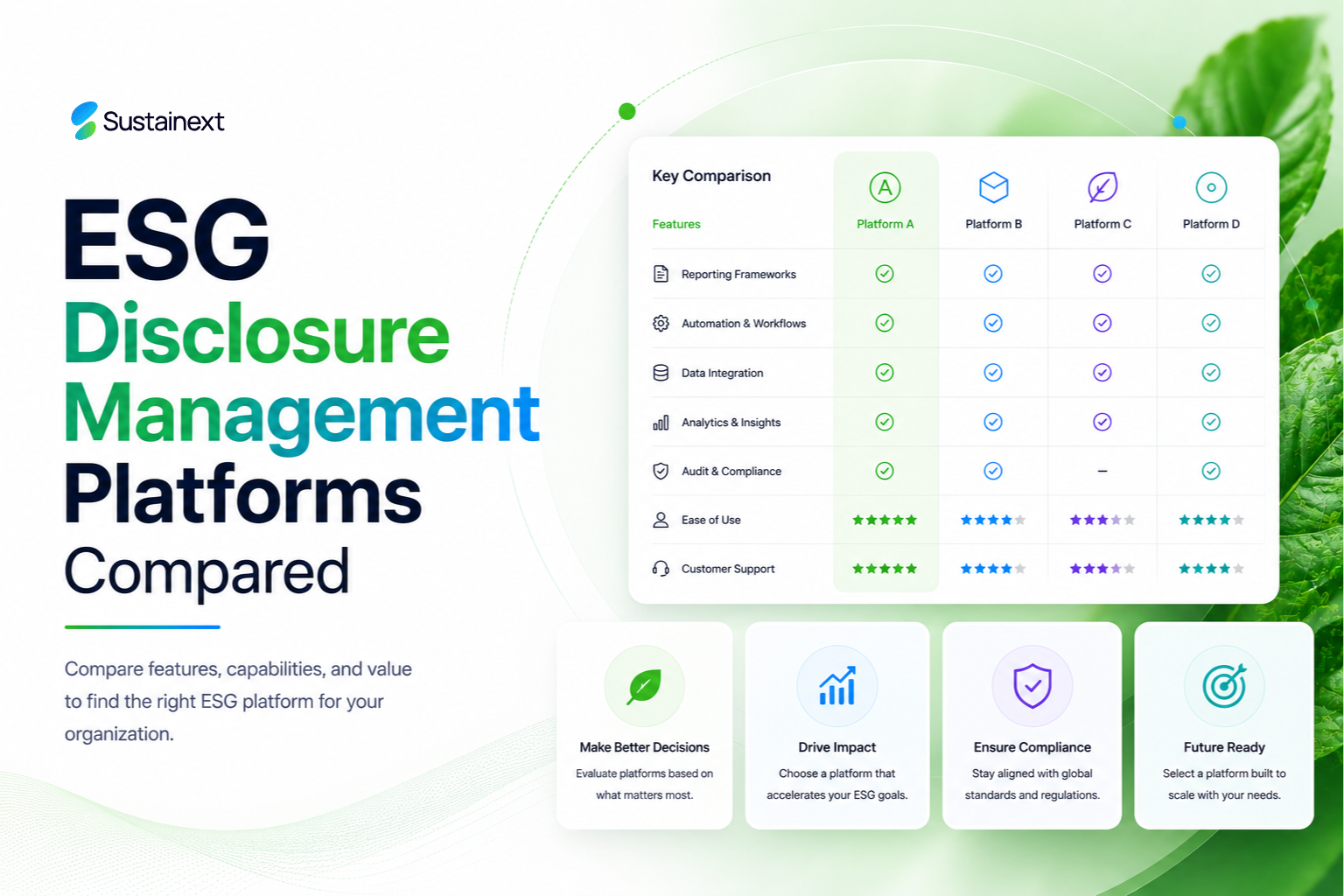
If procurement leaders need a broader perspective on how platforms support disclosure and evidence management, Sustainext’s comparison of ESG Disclosure Management Platforms Compared – Sustainext offers useful context.
The simple file-format checklist first-time teams should use
When asking colleagues for ecovadis assessment documents, do not just say, “Send whatever you have.” Use a standard request format.
For each document, capture:
- document name
- related theme
- policy, action, or result classification
- owner
- legal entity or site scope
- country scope
- date issued
- date last reviewed
- source system or folder
- file type
- confidentiality level
- linked questionnaire topic
Preferred file types
- searchable PDF
- Excel or CSV for KPI tables
- PPT only when it contains formal management review evidence
- image files only when no better format exists
- certification PDFs with visible scope and expiry date
Common reasons EcoVadis evidence gets weakened or rejected
A strong ecovadis questionnaire preparation process is not just about collecting more files. It is about collecting the right files.
Watch for these common issues:
1. Documents created just for submission
If the evidence appears to exist only because the questionnaire asked for it, it may not be credited. EcoVadis supporting documents
2. No clear date or approval trail
Undated policies or unsigned procedures reduce credibility.
3. Global policy, no local applicability
If the document is group-wide, show why it applies to the rated entity.
4. Policy only, no execution proof
A policy without training records, audits, KPIs, or CAPAs is incomplete.
5. Metrics with no methodology
If you provide KPI tables, be ready to explain how data was gathered and over what period.
6. Overloaded uploads
A 200-page report with no relevant section markers is harder to use than a concise, targeted document set.
Who should own each part internally
The fastest way to prepare for EcoVadis is to assign evidence owners early.
Recommended owner map
- ESG or sustainability: project manager, final narrative consistency, KPI consolidation
- EHS: environment and occupational health and safety evidence
- HR: labor, diversity, training, grievance process, employee metrics
- Legal/compliance: ethics, anti-bribery, whistleblowing, investigations
- Procurement: supplier code, risk screening, sustainable procurement evidence
- Finance: selected KPI validation, reporting controls
- IT/security: privacy and cybersecurity evidence
- Quality/internal audit: CAPAs, audit trails, management systems evidence
If you are still deciding whether to manage this internally or with platform support, Sustainext’s main Consulting enabled, platform led solution page outlines how mixed-model delivery can reduce assessment friction.
A realistic 4-week evidence collection workflow
Here is a practical workflow for first-time reporters.
Week 1: Scope and questionnaire readiness
- confirm assessed entity and sites
- review prior customer requests
- identify likely activated themes and criteria
- create the evidence tracker
- assign owners by function
Week 2: Collect policies and process documents
- gather all formal policies
- validate dates, version control, and approvals
- remove duplicates
- identify missing foundational documents
Week 3: Collect actions and results
- request training logs, audits, CAPAs, KPI reports, supplier screening records
- map each file to a likely questionnaire area
- flag evidence gaps where only policy exists
Week 4: Quality review and packaging
- check scope alignment
- confirm file readability
- rename files consistently
- prepare concise internal notes on what each document proves
- escalate true gaps before submission
For organizations building a longer-term reporting engine, Sustainext’s Craft Tomorrow’s Legacy Today platform page and ESG Reporting Software: 10 Best Tools for 2026 – Sustainext can help benchmark what scalable evidence management should look like.
A reusable EcoVadis document naming convention
Use a standard naming model such as:
Theme_DocumentType_Entity_Country_Date_Version
Example:
Environment_WastePolicy_USManufacturing_2026-03_V2.pdf
This sounds basic, but it dramatically improves review speed and helps future reassessments.
Final pre-submission checklist
Before you submit, ask these questions:
- Does every major answer have supporting evidence?
- Does each file clearly match the assessed scope?
- Are policies supported by actions and results?
- Are dates current and visible?
- Are certifications valid and in scope?
- Are KPI tables understandable without extra explanation?
- Have you removed duplicate or low-value uploads?
- Does each owner approve the final evidence set?
If the answer is yes, your ecovadis documents checklist is doing its job.
Conclusion
The best first-time EcoVadis submissions are not built in the questionnaire window. They are built in advance through disciplined evidence collection.
If you were wondering what documents for EcoVadis are typically needed, the answer is not one master file but a structured set of policies, actions, and results across the four themes: environment, labor and human rights, ethics, and sustainable procurement. The teams that perform best are usually not the teams with the most documents. They are the ones with the clearest scope, freshest evidence, and strongest internal ownership.
Start with a lean but credible document pack. Focus on relevance, recency, and traceability. Then turn this one-time effort into a repeatable evidence process you can reuse every year.
FAQs
What documents are required for EcoVadis?
There is no single universal document list because EcoVadis questionnaires are customized by company size, industry, and geography. In most cases, companies should prepare policy documents, implementation records, and KPI or results evidence across environment, labor and human rights, ethics, and sustainable procurement. A good mix includes policies, training logs, audit records, certifications, corrective actions, supplier due diligence records, and performance data. EcoVadis questionnaire help
What is the best EcoVadis evidence checklist for first-time preparation?
The best checklist groups documents by the four themes, then by policy, action, and result. It should also capture owner, scope, date, and file format. That structure makes it easier to identify missing evidence before submission.
Can I create documents specifically for EcoVadis?
You can organize existing records for submission, but EcoVadis states that documents created solely to satisfy the questionnaire will not be accepted as supporting evidence. EcoVadis supporting documents
How recent should EcoVadis assessment documents be?
As a rule of thumb, foundational policies should be current and formally reviewed, while action and KPI evidence should ideally come from the most recent 12-month reporting period.
Who should own EcoVadis questionnaire preparation internally?
Usually, sustainability or ESG leads the process, while HR, EHS, legal, compliance, procurement, finance, and operations provide topic-specific evidence. The strongest submissions use one central tracker and clear deadlines for each owner.